Christmas on the Deck: Five Steps to a Summer Ready Backyard
Christmas in the Shire happens outside. The prawns, the backyard cricket, the cousins who turn up at eleven and leave at nine, all of it ends up in the yard. If your outdoor area is still a patchy bit of lawn or an old deck with boards lifting, now is the time to sort it, because the run from November through to Australia Day is the busiest stretch of the year for our carpentry teams.
A timber deck is the quickest way we know to add real living space to a Sydney home without building an extension. It costs less per square metre than building inside, it adds value when you sell, and if it sits on proper footings with the right boards it will outlast most of what is in your house.
We are LEDS Construction Group, a licensed builder based in the Sutherland Shire, and decks and pergolas are one of the things we build most. Here are the five steps we walk every client through, from the first site visit to the first barbecue.
Step 1: Work out what the deck is actually for
Before anyone talks timber, we ask how you want to use the space. A deck built for twenty people at Christmas lunch is a different shape to one built for two chairs and a morning coffee. At the first site visit we go through where the afternoon sun lands, which doors the deck should open from, whether it needs to connect to a pool, a lawn or a water view, and whether you want a roof over part of it.
Getting this right early saves money later. Stairs, split levels, built in seating and pergola posts all change the framing underneath, and they are cheap to draw and expensive to retrofit once the boards are down.
If you want to see it before you commit, our LEDS Design team can draw up concept plans and material selections for you. And if you just want a number to work with, our free online deck calculator gives you a ballpark budget in a couple of minutes, before we have even come out to measure.
Step 2: Pick boards that can handle a coastal backyard
Most of the Shire sits within a few kilometres of salt water, so board choice matters more here than it does further inland. The two options we lay most are hardwood and composite.
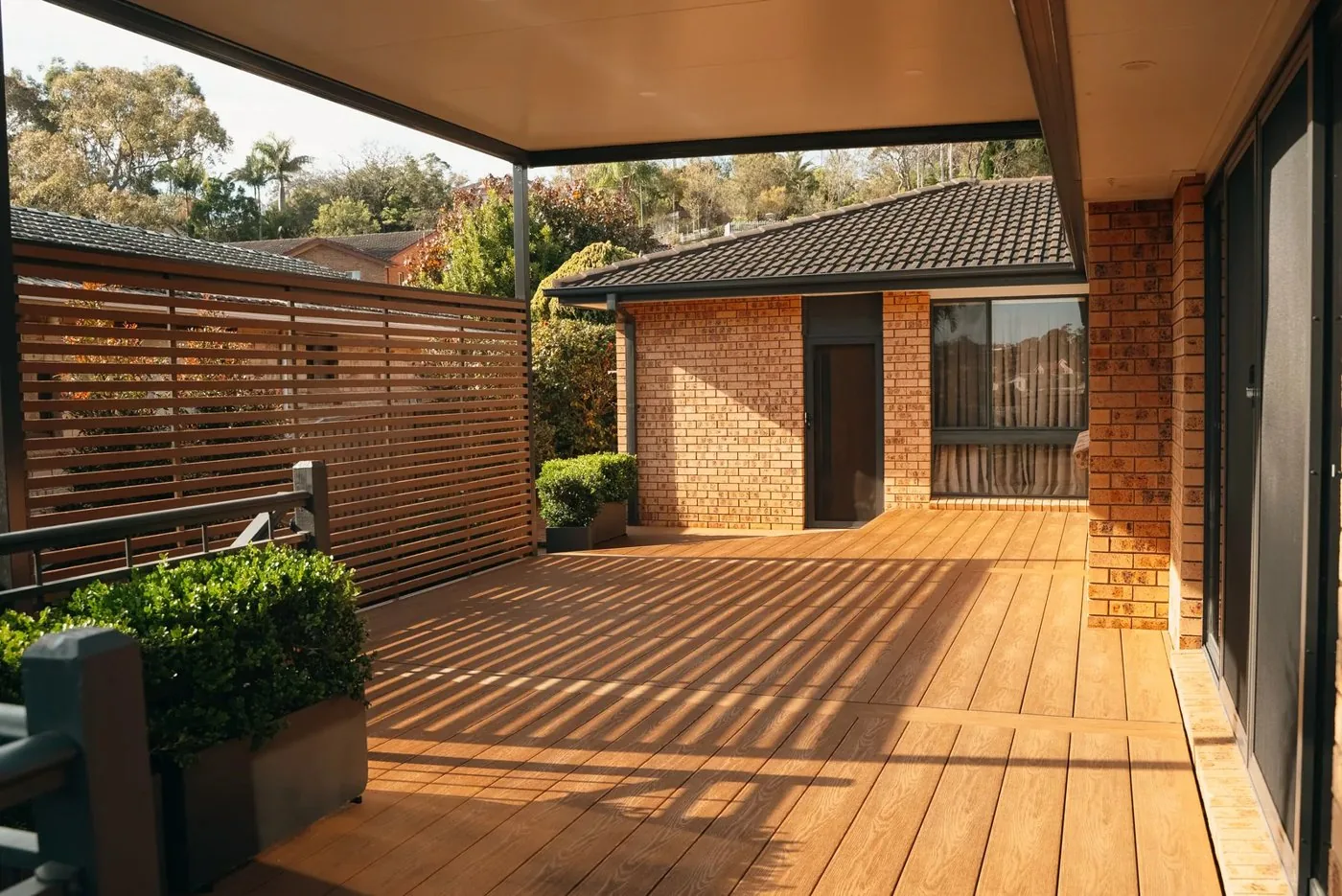
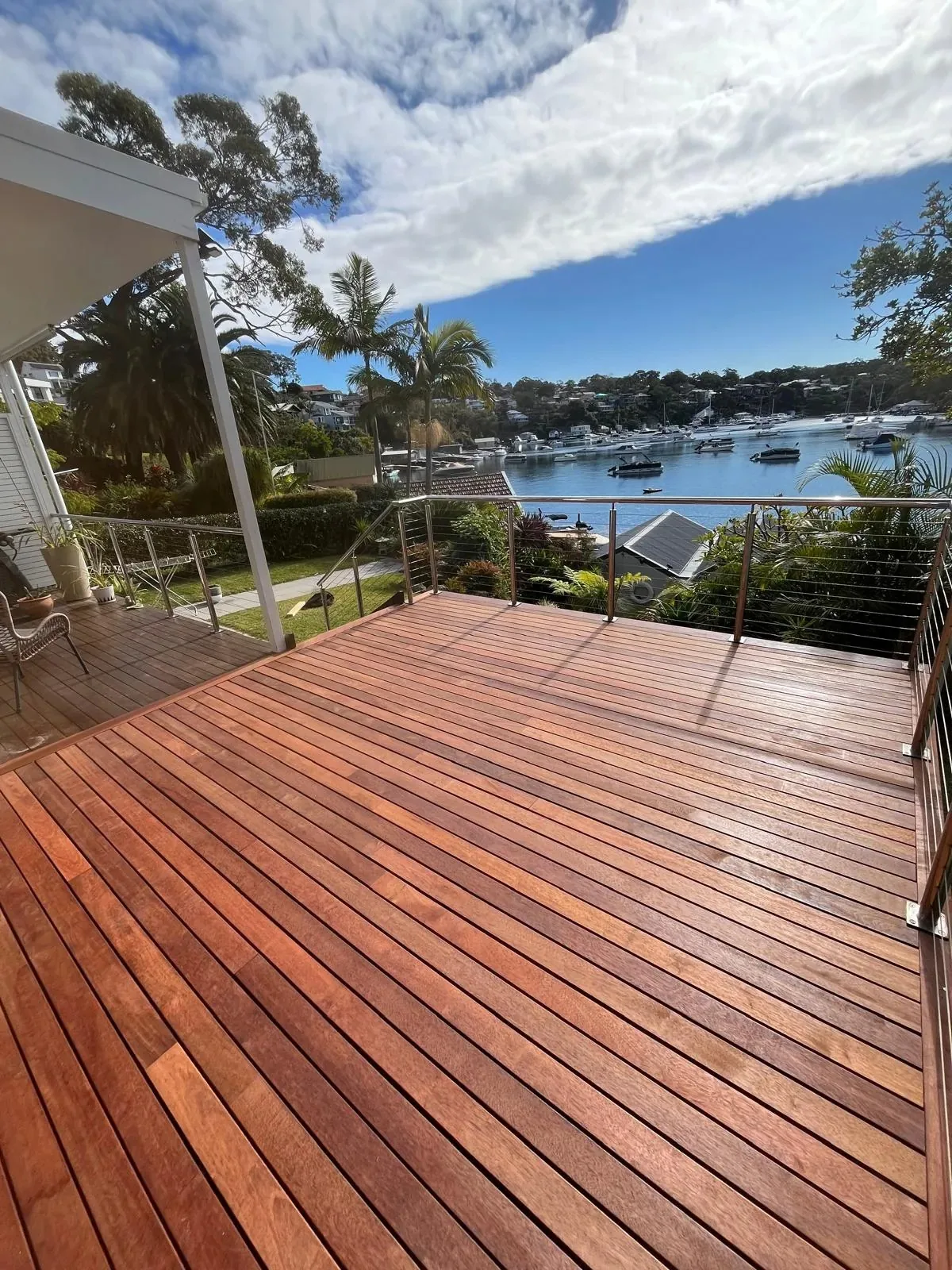
Hardwood is the classic look. Merbau is the most popular because it is dense, stable and well priced, and it is what we used on the Bexley deck pictured below. Australian species like spotted gum and blackbutt cost more but give you a lighter colour and more variation in the grain. Merbau, spotted gum and blackbutt are all on the list of bushfire resisting timbers, which matters if your block backs onto the national park. Any hardwood needs oiling every year or so to hold its colour, so factor that into the decision.
Composite is for people who never want to pick up an oil brush again. We are a Millboard partner, and Millboard is the composite we recommend because it is moulded from real timber so it does not look like plastic, it will not rot, warp or splinter, and it stays slip resistant when wet. It costs more up front and saves you time and money every year after that.
Whichever way you go, the fixings matter as much as the boards. Close to the coast we use stainless or coated screws and protect the joists with tape so the structure lasts as long as the surface does.
Step 3: Sort the approval and the site before the calendar fills
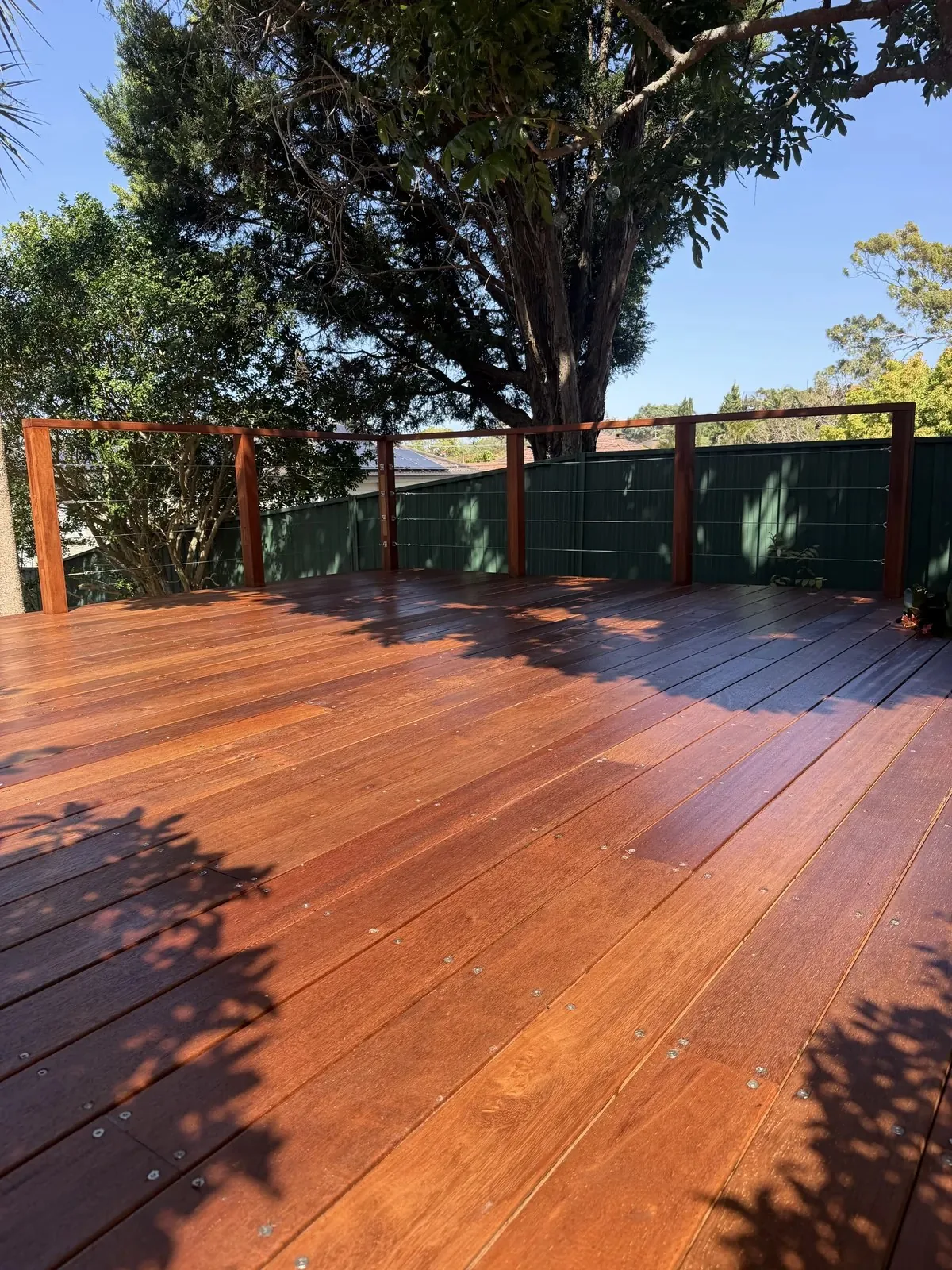
This is the step that catches people out in November. Small, low decks can often go ahead without council approval under the NSW exempt development rules, but once you add height, a roof or a bigger footprint you are usually into Complying Development Certificate territory. We handle CDC approvals ourselves through private certifiers, so you are not waiting on council to get back to you. The certifier still needs plans and a few weeks though, so the earlier we start, the better your chances of eating Christmas lunch on the new boards.
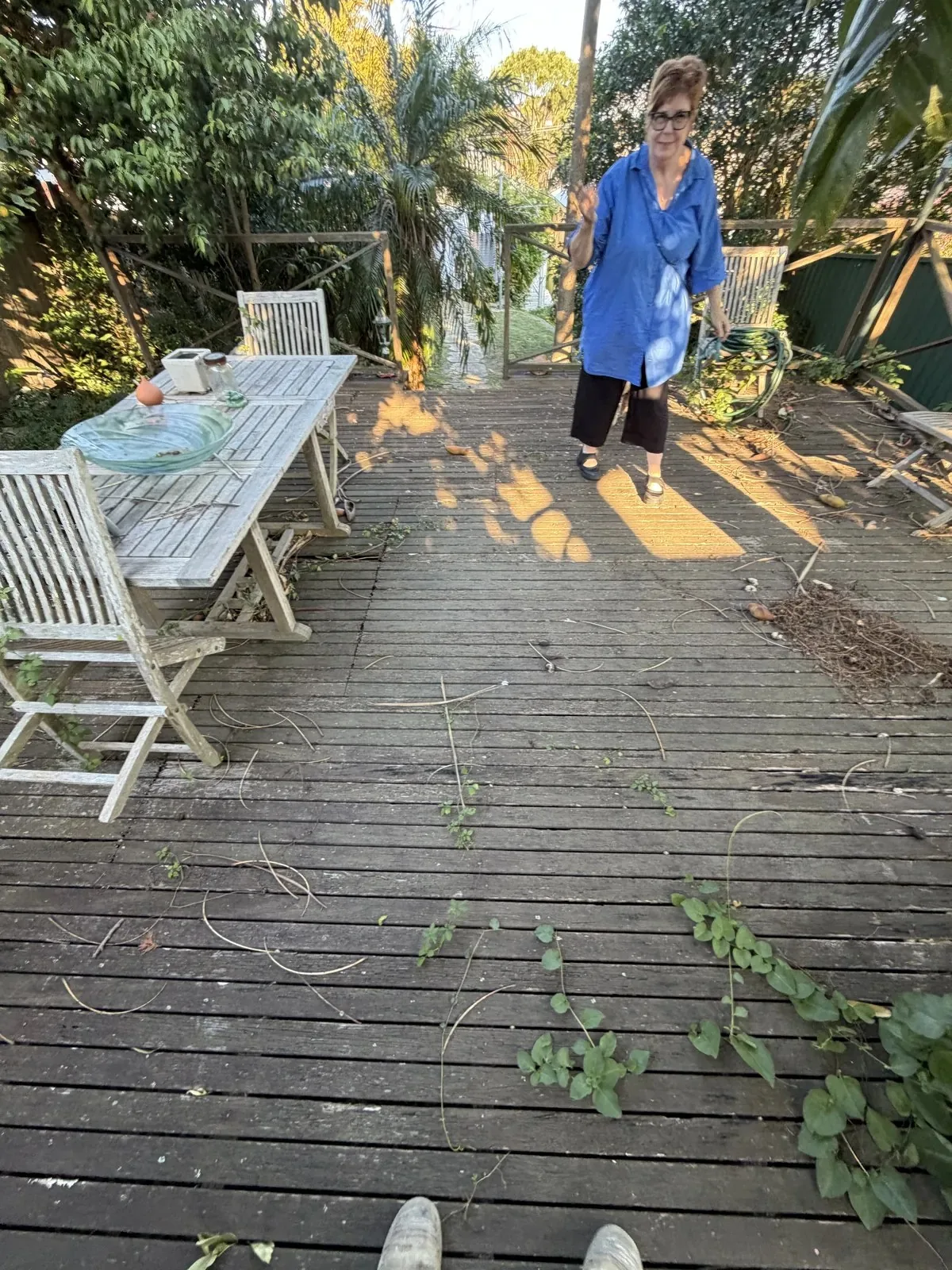
While the paperwork is moving, we sort the site. That means pulling out the old deck or paving, checking anything we are keeping for rot and termites, digging footings to suit the soil, and getting the fall and drainage right so water runs away from the house instead of under it. On sloping blocks, which is most of the Shire, this is where a cheap deck and a good one part ways.
Step 4: Build it with a crew who will still be around in ten years
Our decks are built by our own carpentry teams under our builder licence, with one of our directors running the job on site. It is the same crew you see on our Instagram, not whoever was free that week. Every deck is framed to Australian Standards with treated bearers and joists, galvanised or stainless hardware, and boards gapped properly so they can move with the seasons without cupping or squeaking.
You will know what is happening the whole way through. Every client gets a group chat with their foreman from day one, photo updates as the job moves, a detailed proposal before we start, and a weekly review so you always know where the budget and the timeline sit. If something changes on site, you hear it from us first, not from the invoice.
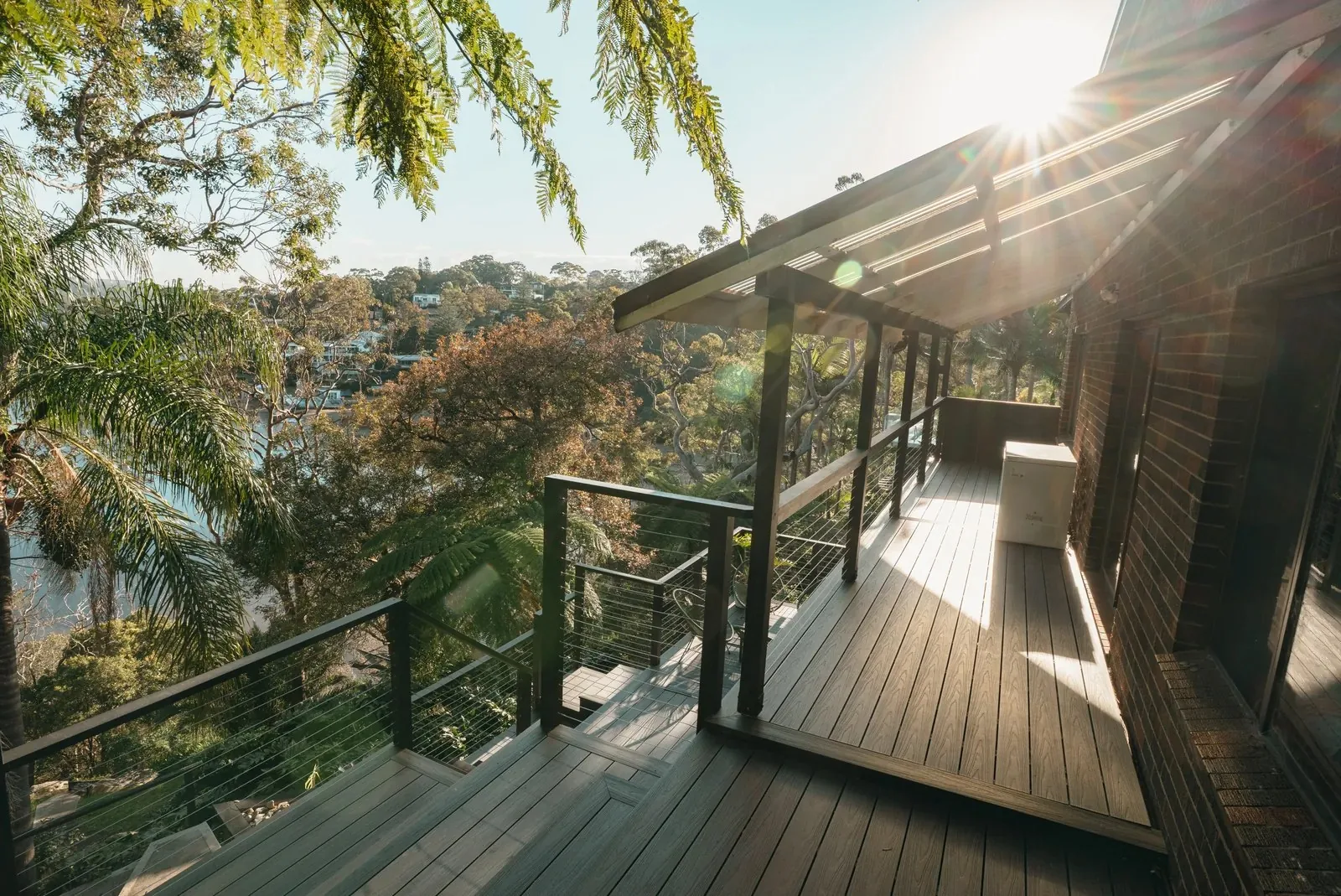
Step 5: Finish it, furnish it and look after it
The last ten percent is what people notice. Once the boards are down we oil hardwood decks straight away so they are sealed before the first summer storm, and we recommend another coat about twelve months in. After that, a wash down each spring and a coat of oil every year or two keeps a Merbau deck looking new for decades.
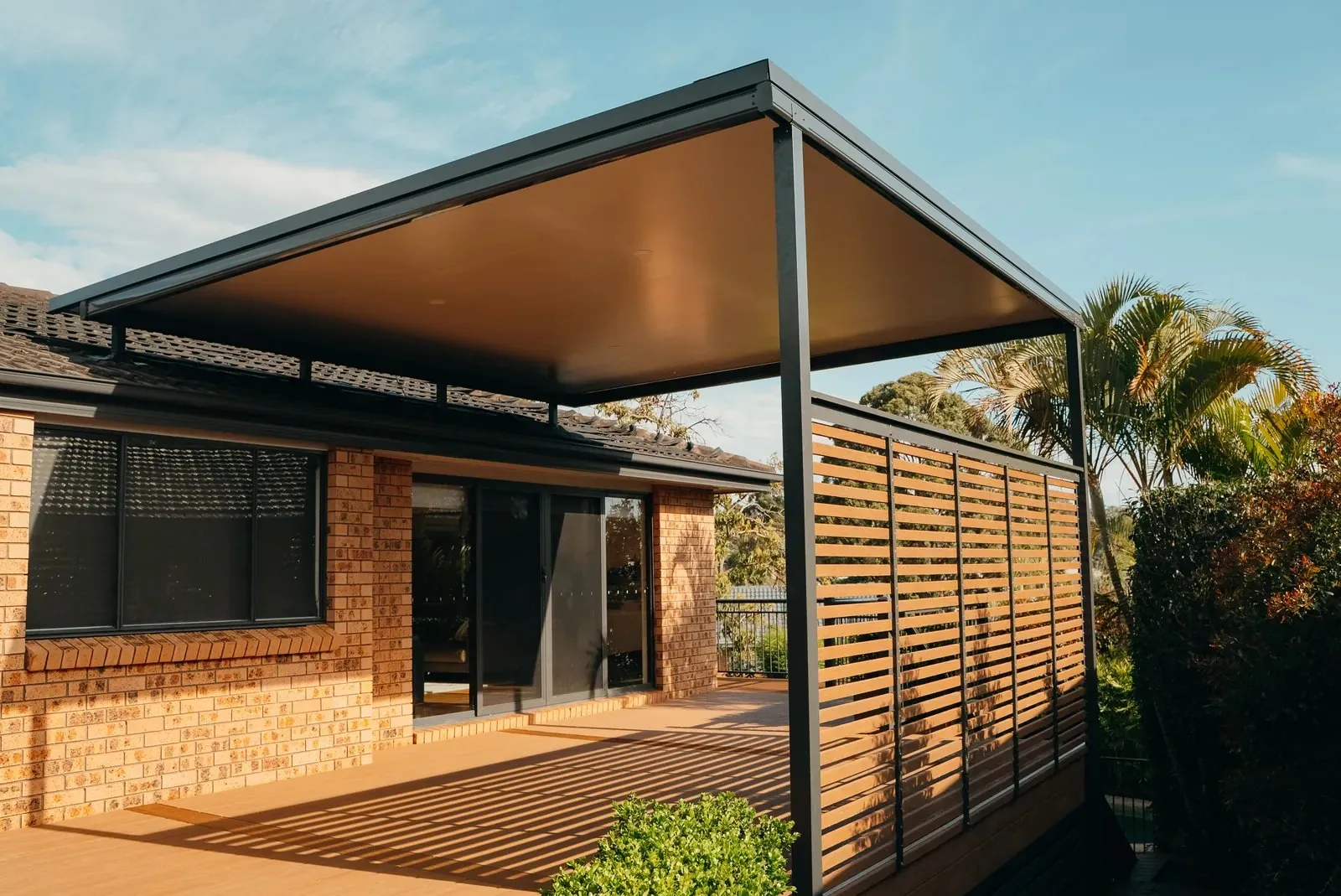
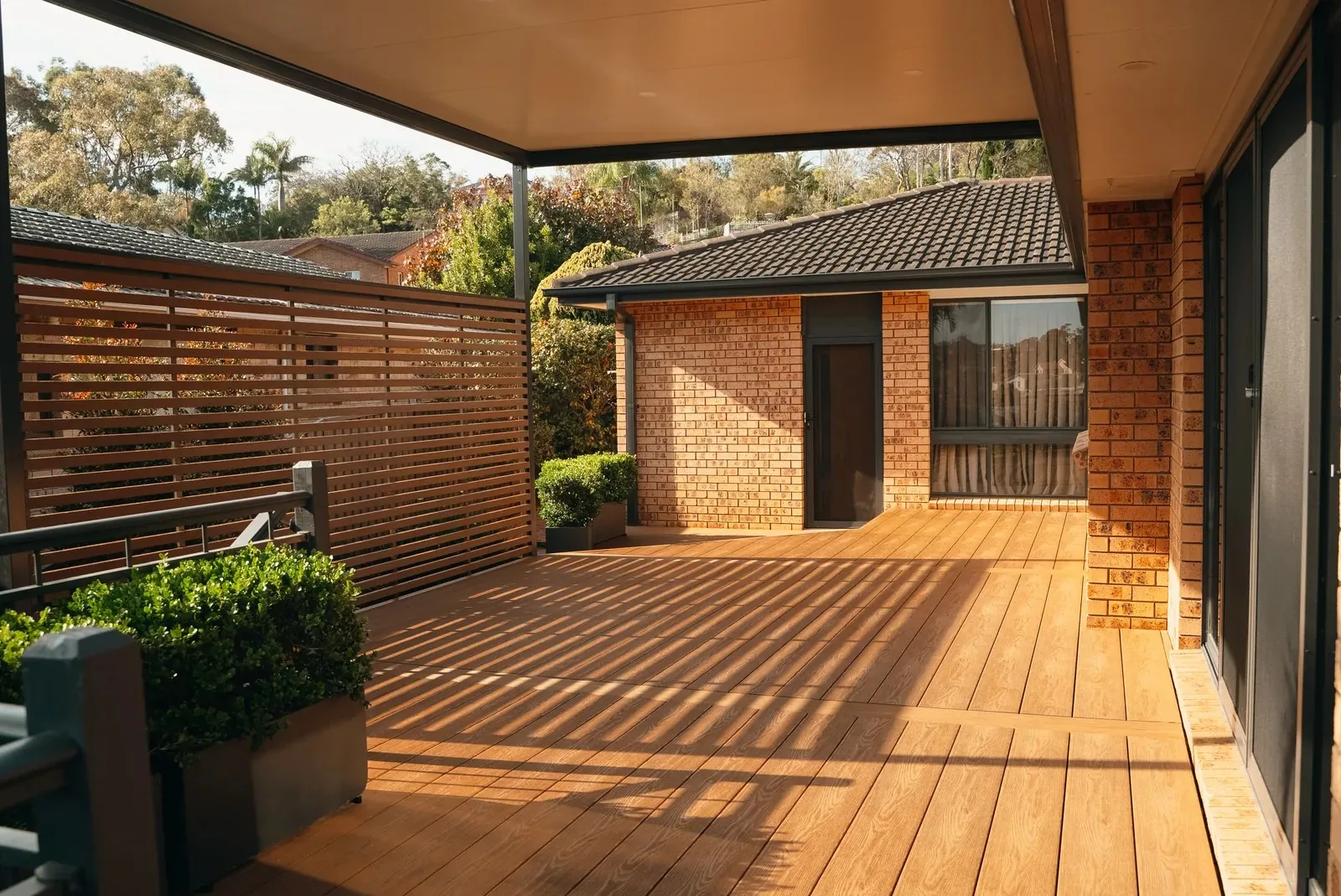
Then make it a room. A flat roof pergola turns a deck into shade on a 35 degree day, and as a Stratco authorised dealer we can match the roofing to your house. Timber privacy screens, like the one on the Woronora deck below, hide the neighbour’s fence and give you somewhere to hang the fairy lights. Downlights, outdoor power points and a ceiling fan are all handled by LEDS Electrical in the same job, so you are not chasing a second trade in December. Add a long table, a few planters and an outdoor lounge and you have the best room in the house.
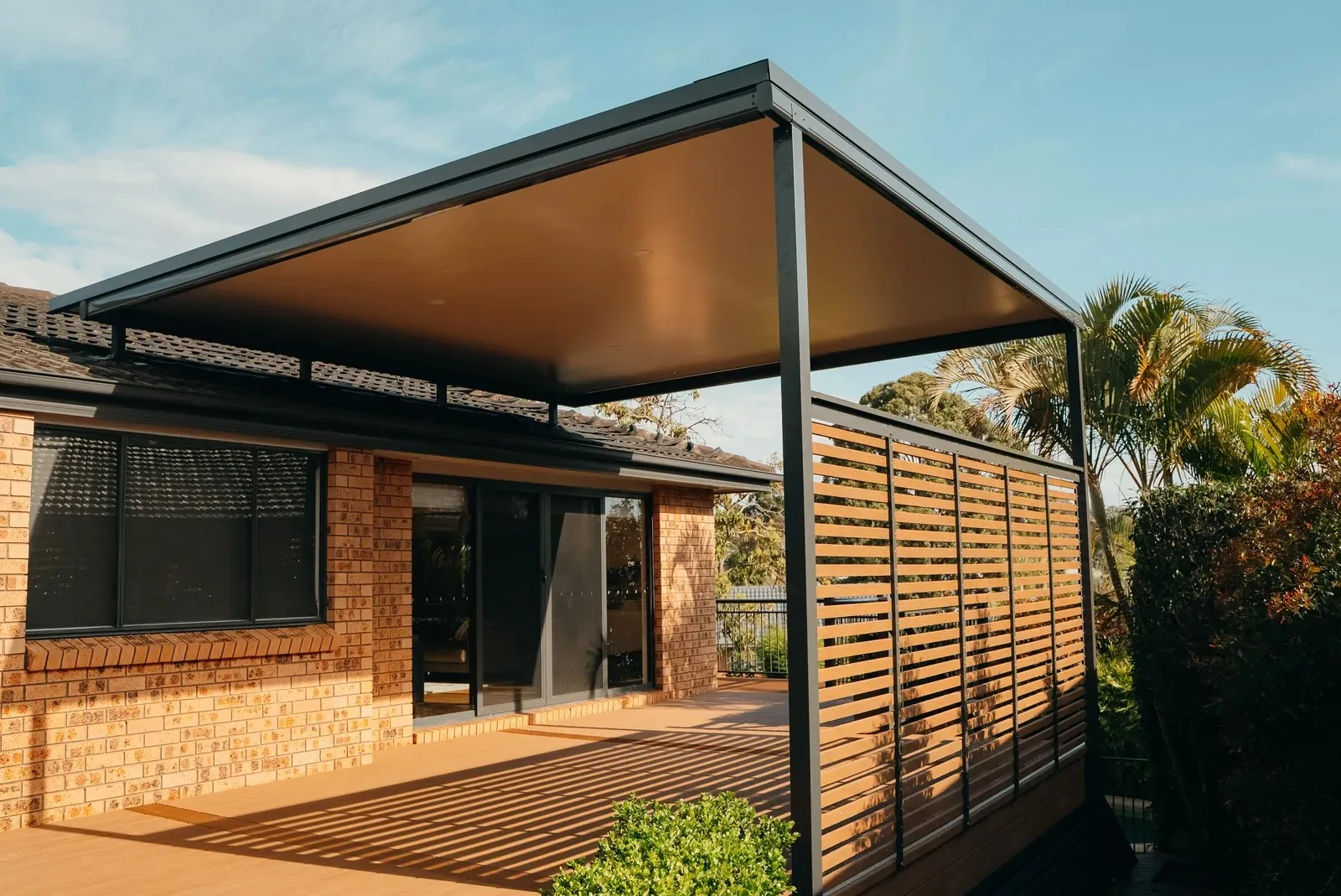
Ready for Christmas on the deck?
LEDS Construction Group builds decks and pergolas across the Sutherland Shire and the rest of Southern Sydney. We are a licensed builder (Builder Lic. 476277C, Carpentry Lic. 397688C), a Local Business Awards 2026 finalist, and we carry a 5 star Google rating from clients who are happy to tell you about it.
Run your numbers through the deck calculator, or get in touch for a free quote. We will come out, measure up and give you a straight answer on what can be built before Christmas.
Phone: 0404 049 117
Email: admin@ledsgroup.com.au
Request a quote: ledsgroup.com.au/contact
See more of our decks on Instagram, Facebook and TikTok.